

- May 13, 2026
- Posted by: David Marshall
- Category: Innovation, Management, Manufacturing
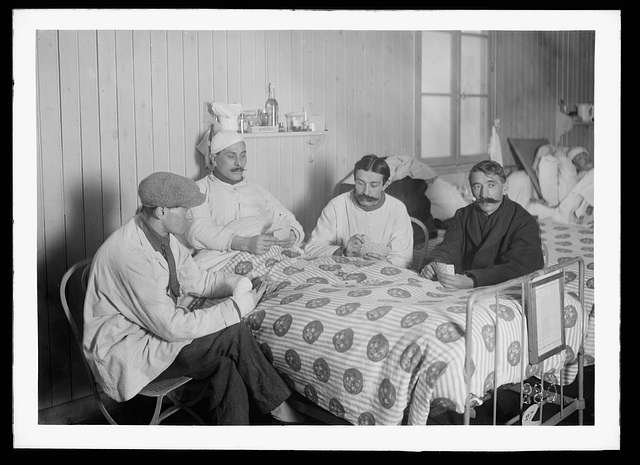
When I first looked at what we were spending on workers’ compensation, I knew something wasn’t right.
For one thing, the costs were ridiculous. Not because we had an unsafe workplace or people were getting seriously injured every day. It was because the workers’ comp system itself encouraged abuse.
People would file claims for injuries that — “allegedly” — happened years earlier. Or, someone would hurt themselves working on their roof over the weekend, then months later, it would somehow become a workplace injury. Others would wait weeks, or even years, to report an injury and still expect the claim to be accepted.
The system rewarded bad behavior, and everyone knew it. I’d like to think my associates wouldn’t commit this kind of abuse, but I’m not fooling myself. Human nature is human nature.
Texas is unique among workers’ comp systems in that companies like ours have the option of participating in the state’s workers’ compensation system or becoming a nonsubscriber and designing their own occupational injury program. That is, do you let Texas handle all the paperwork, or do you want to pay for it yourself?
Most companies stay with the traditional system because that’s what they’ve always done. But I decided to ask a different question.
What if we built a system that actually worked for honest employees while at the same time could eliminate the incentives for fraudulent claims? That became my main goal, so I set to work and began researching the idea.
One of the first things I discovered surprised me: Doctors often weren’t eager to treat workers’ comp patients. The paperwork was cumbersome, reimbursement was slow, and employees sometimes didn’t receive the care they needed as quickly as they should have, which made the injury worse because it didn’t get treated.
That made no sense. If one of my associates got hurt doing work for my company, I wanted them to receive the best medical care available immediately. If they needed surgery, they got surgery. If they needed a specialist, they saw the best specialist. If they had to be airlifted to save their life, by God, they were airlifted.
The goal wasn’t to save money on legitimate injuries. The goal was to make sure people were made whole as quickly as possible.
That’s what employers should do. If nothing else, it’s humane and tells your associates that you value them. If you want to earn their loyalty, you treat their injuries like real problems that need to be solved.
At the same time, I knew we had to address the abuse that was driving costs through the roof.
Most executives would have tried to force a new policy through management, but I did something different: I sat down with the union leadership and presented the idea to them.
Understandably, many unions are skeptical whenever management proposes changes involving health and safety. There have been too many cost-cutting initiatives disguised as improvements that end up treating the associates like disposable machines.
I knew if this was going to work, it couldn’t be management versus labor. So I told them exactly what I believed: “It occurs to me that 80 percent of these claims are nonsense. If you don’t believe me, go ask your own members.”
Which they did. To their credit, they didn’t defend the system just because it already existed or because we had always done it that way.
They surveyed their own constituents, and the response surprised no one. The members themselves admitted that many of the claims weren’t legitimate. People knew the system was being abused, and they also knew those abuses ultimately affected everyone.
Once we could agree on the problem and its scope, solving it became much easier.
They no longer had to defend the system; they agreed it was broken. When most changes get made, the arguments end up being about the wrong thing. One side argues against the problem, so the other side can’t present the solution.
So we reached an agreement and created one simple rule: If you’re injured on the job, you report it before the end of your shift.
That’s it.
We also provided medical screening to create a baseline of any old injuries or to determine your overall health, so you couldn’t say an old injury was a new one.
Management would immediately determine whether medical treatment was needed, and if it was, the employee would receive the best care available. This wasn’t like your insurance company denying a life-saving treatment. We wanted you to be whole, so we wanted to get you the treatment you needed.
That also meant you couldn’t come back two months later and suddenly remember that your shoulder started hurting while you were lifting something at work. You couldn’t wait two years and decide that an injury from home belonged on the company’s books.
If it happened at work, you reported it that day. If it wasn’t reported that day, it wasn’t a workplace injury.
You have no idea how much nonsense disappeared overnight.
The honest employees weren’t affected at all. In fact, they were better off because they received faster treatment and better medical care than they had under the traditional workers’ compensation system.
The only people who lost were the ones trying to game the system. That’s an outcome I could live with.
What made the program successful wasn’t just the policy itself, it was the way we introduced it. The union didn’t see us as taking something away, they saw it as an upgrade.
Their members were no longer trapped in a bureaucratic workers’ compensation process where treatment could be delayed or limited. Instead, they knew that if they were legitimately hurt, the company would immediately take care of them without hesitation.
That’s a much better promise than simply saying, “We’ll process your claim.” When employees trust that you’ll do the right thing, they’re much more willing to support reasonable accountability.
Too many leaders believe accountability requires being tough, which is wrong. It’s about being fair. It’s taking care of people when they genuinely need help and not tolerating abuse of the system.
Those two ideas aren’t contradictory. In fact, they depend on each other.
Every system produces exactly the behavior it’s designed to produce. If you reward people for waiting months to report injuries, don’t be surprised when they do exactly that. If you make legitimate medical treatment difficult, don’t be surprised when associates distrust management. If you create a process that honest people believe is fair, they’ll usually help you protect it from those who aren’t being honest.
Leaders often blame people for a system’s shortcomings when we should be examining the systems we’ve built around them. Most people respond rationally to the incentives we create, so if you change the incentives, you’ll change the behavior.
That’s exactly what happened by paying for our workers’ comp insurance ourselves. It worked because people knew where they stood. If you got hurt on the job, we’d take care of you immediately. If you tried to game the system, you couldn’t.
The union understood it, management understood it, and the employees understood it. Once everyone trusted the rules, the abuse largely disappeared. And that’s what happens when you build a system that’s actually fair.
I’ve been a manufacturing executive, as well as a sales and marketing professional, for a few decades. Now, I help companies turn around their own business, including pivoting within their industry. If you would like more information, please visit my website and connect with me on Twitter, Facebook, or LinkedIn.
Photo credit: American National Red Cross 1944 and 1952. (Library of Congress, public domain)
