

- April 9, 2025
- Posted by: David Marshall
- Category: Innovation, Leadership

For nearly fifty years, I’ve had the privilege of working at the intersection of materials science, high-volume product, and global supply chains. Whether it’s helping to improve efficiency or helping turn around a manufacturing operation, one lesson has remained consistent: Manufacturing is never static. It’s always evolving, always changing, and it reshapes not only what we make, but who we become as manufacturers.
Today, we are at the juncture of a new phase of manufacturing technology advancements. Artificial intelligence and automation are no longer just buzzwords in industry journals and marketing blogs; they’re here, they’re being used extensively, and they are causing the next revolution in manufacturing and logistics.
But as powerful as the tools are, they cannot replace human ingenuity and creativity. If anything, they are just tools to be used by the humans who come up with the actual solutions to problems. They shouldn’t create; they should analyze and brainstorm. But you would never want to rely on them to create your products, determine your production schedule, or run your operation.
The New Manufacturing Industry
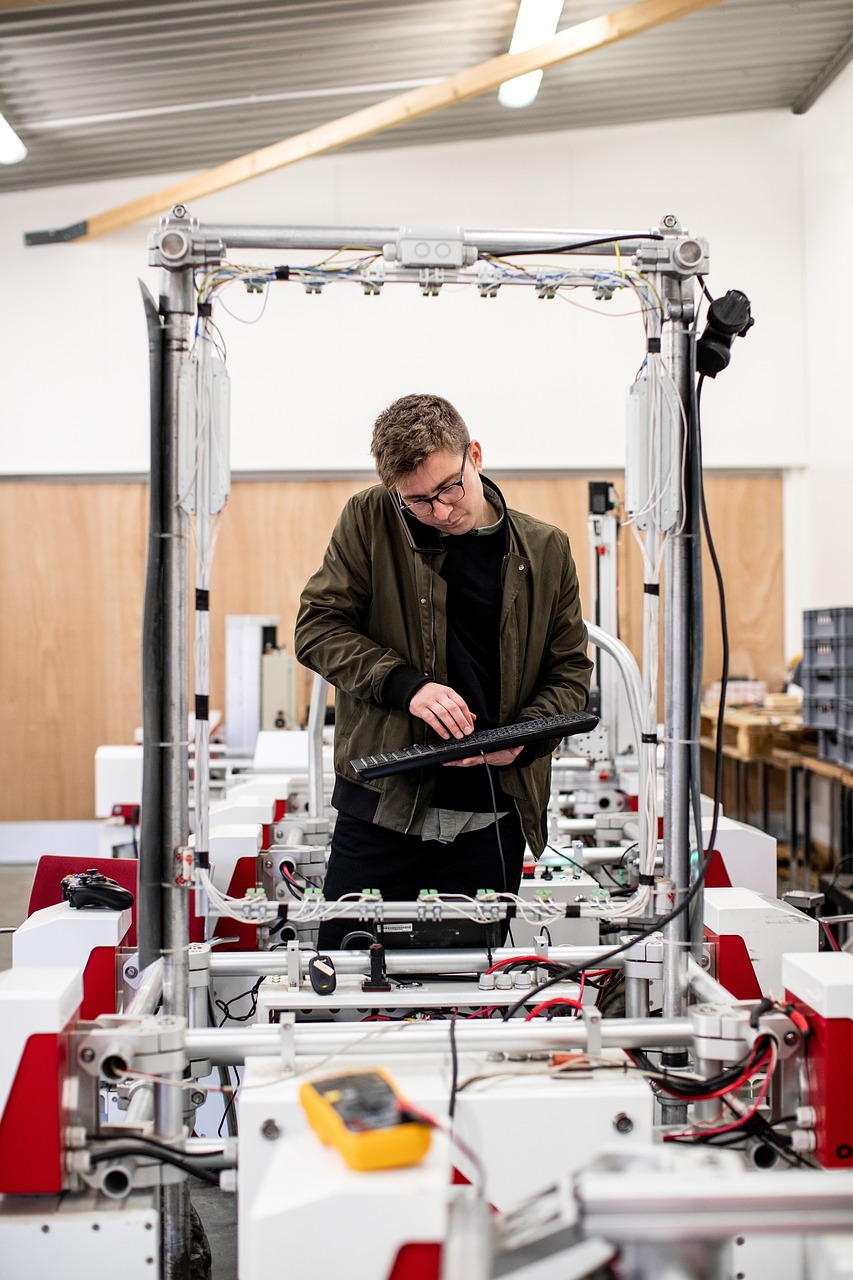 In the 20th century, we measured success in manufacturing by scale, consistency, and reduced costs. It was in the early part of the 21st century that I started seeing — and using — more automated machinery, lean methodologies, and globalized supply chains.
Now, in the 2020s, the rules are changing. Customers don’t just want products, they want solutions that are tailored to their unique needs. They want companies to understand them and come up with the solutions that will help them. Supply chains are also under pressure from geopolitical shifts, natural disruptions, and increased demands for transparency.
Digital manufacturing, automation, and artificial intelligence are the connective tissue of this new manufacturing ecosystem. Factories are becoming smarter, more adaptive, and more resilient.
Of course, they’re also changing the look of the workforce, as companies need associates who can interpret, direct, and innovate beyond the limits of the machines. They not only have to be able to operate and repair these machines, they have to think past them and know how to harness this.
The factory of the future will be a collaborative environment where humans and machines augment each other and work together.
Beyond the Hype of AI in Manufacturing
I’ve found that artificial intelligence is misunderstood in manufacturing circles. I mean, I’m still trying to get people to think about digital manufacturing, and this is advanced-level stuff. Basically, I’m trying to get them to walk, and AI folks are trying to get them to drive.
AI is not about making machines that think like people; it’s about using advanced algorithms to process data faster and more accurately than humans can. This is what AI is ideally suited for — not creating art and writing, it’s about analyzing, processing, and calculating faster than humans.
For example, use AI-driven quality control systems to inspect parts at speeds and resolutions that no human eye could match, flagging micro-defects before they propagate downstream, leading to pileups and bottlenecks. Or worse, letting a day’s or week’s worth of defects through the system, only to be discovered by the customer halfway around the world.
In fiberglass liner manufacturing, you could use AI-powered predictive maintenance tools to analyze vibration, temperature, and acoustic signatures to predict when filament winding machines need servicing, which can prevent costly unplanned downtime.
But this is more than just a matter of efficiency. It lets you build flexibility into your operations. AI systems can reconfigure schedules, optimize the raw material usage, and adapt workflows to handle disruptions, something we’ve all faced in the last five+ years. When your supply chains choke, the weather disrupts transportation, or your customer demands suddenly shift, if you’ve got AI-driven decision-making capabilities, you can pivot very quickly.
But AI is not self-sufficient. As much as I would like to have a factory with just two buttons — START and STOP — the data has to be placed into context. The algorithms have to be watched, confirmed, and fine-tuned. And the decisions still require the judgments of experienced engineers, operators, and managers. AI works best when it’s used as a tool and supports human expertise, not a replacement for it.
Automate Smarter, not Just Faster
Automation has been the key to manufacturing since Thomas Robins invented the first conveyor belts used for transporting coal in 1892. But the future is less about speed and more about adaptability.
In oilfield applications, fiberglass tubulars once required rigid, repetitive manufacturing processes. Automation helped, but it didn’t have the flexibility needed to deal with variations in specifications or formulas. But today, with flexible automation systems, we can reprogram equipment in hours, not days and weeks. That lets manufacturers make small-batch production runs that were once economically impossible, or at least super expensive.
I think the next frontier will be collaborative automation, where robots and humans will work side by side. Right now, that’s still dangerous because robots and robotic arms don’t have a lot of safety features — they just move and perform their functions, regardless of how many humans they clobbered to perform. They’re about as aware as a hydraulic press without electronic eyes to stop when someone gets a finger in there.
Instead, modern factories have been, and will continue to, equip robots with advanced sensors and safety protocols that let them handle repetitive, heavy tasks, while people focus on problem-solving, design, and continuous improvement.
But it will continue to be human ingenuity that will drive manufacturing forward. In my career, I’ve seen lighting engineers find thermal management solutions that create new product lines, and line associates whose insights save the company millions of dollars in savings and improvements.
It wasn’t the machines that innovated, it was the people. AI may be able to suggest patterns, but it’s only the people who can decide if the patterns matter to the long-term strategy. Automation can repeatedly execute flawless tasks, but it takes a human to imagine new ways to combine technologies into breakthrough purposes and processes.
The factories that thrive won’t be the ones that pursue automation for automation’s sake, but the ones that build a culture where people are empowered and allowed to innovate by partnering with machines. In those factories, training, re-skilling, and lifelong learning will be just as important as investing capital in new equipment.
That is, you can’t just add a bunch of new machines with your old associates and expect it to work — you have to pay for retraining and education for your associates. It will also certainly be cheaper and easier than trying to hire all-new staff, because there’s already a labor shortage in that area.
Practical Steps for Manufacturers
To prepare for the juncture where AI, automation, and human ingenuity meet, you need to focus on five key areas:
Data Infrastructure – Invest in robust data collection and integration systems. AI is only as good as the information it processes. Clean, consistent, and contextualized data must be the foundation.
Flexible Automation – Design production systems that can adapt quickly to changes in product mix, materials, and demand cycles. Flexibility is the new efficiency.
The future of manufacturing won’t be defined only by technology. It will be defined by the use of AI, automation, and human ingenuity. Regardless of your industry, the companies that succeed will be those that harness the machines to do what they do best while helping their associates do what they do best.
The upcoming fourth industrial revolution is not about replacing people, it’s about augmenting their capabilities. It will be their creativity and ingenuity, more than any single technology, that will turn manufacturers into a future of resilience, sustainability, and growth.
