

- April 16, 2025
- Posted by: David Marshall
- Category: Digital Transformation, Innovation, Leadership, Manufacturing

If there’s one thing I’ve learned in all my time in leading manufacturing organizations, it’s that the industry never stands still. From the automation boom of the 20th century to lights-out warehouses and robotics to AI-driven factories, every decade has brought seismic shifts. Yet the changes in the next five years may be the most dramatic we have ever seen.
By 2030, manufacturing will look very different from the factories many of us grew up in. Leaders who recognize those signals now and act on them will not only survive, you’ll thrive in this new era. Here are five trends you need to pay attention to in the next five years.
1. Artificial Intelligence Becomes the New Operating System
Right now, most manufacturers are still experimenting with AI. By 2030, it will be the standard operating procedure for most factories. AI won’t just be a tool, it will function as the operating system of most manufacturing enterprises.
Imagine AI platforms that continuously analyze production flows, supplier networks, and customer demands in order to make real-time adjustments. For lighting manufacturers, this could mean instantly rerouting assembly processes to accommodate new chip designs. In fiberglass tubulars, it could fine-tune resin flow rates and curing times based on predictive models, which can reduce waste while improving structural integrity.
AI will also help with workforce management. Predictive scheduling, digital assistants for operators, and real-time safety monitoring will change how plants are staffed. Instead of AI replacing people, the successful companies will use it to augment human decision-making.
What leaders must do now: Invest in systems that collect, clean, and contextualize information from every corner of your operation.
2. The Rise of Flexible, Modular Factories
 The days when production lines churned out the same product for a decade are long past. Product lifecycles are shrinking, customization is increasing, and supply chain volatility is here to stay.
This means factories need to be as adaptable as the markets they serve.
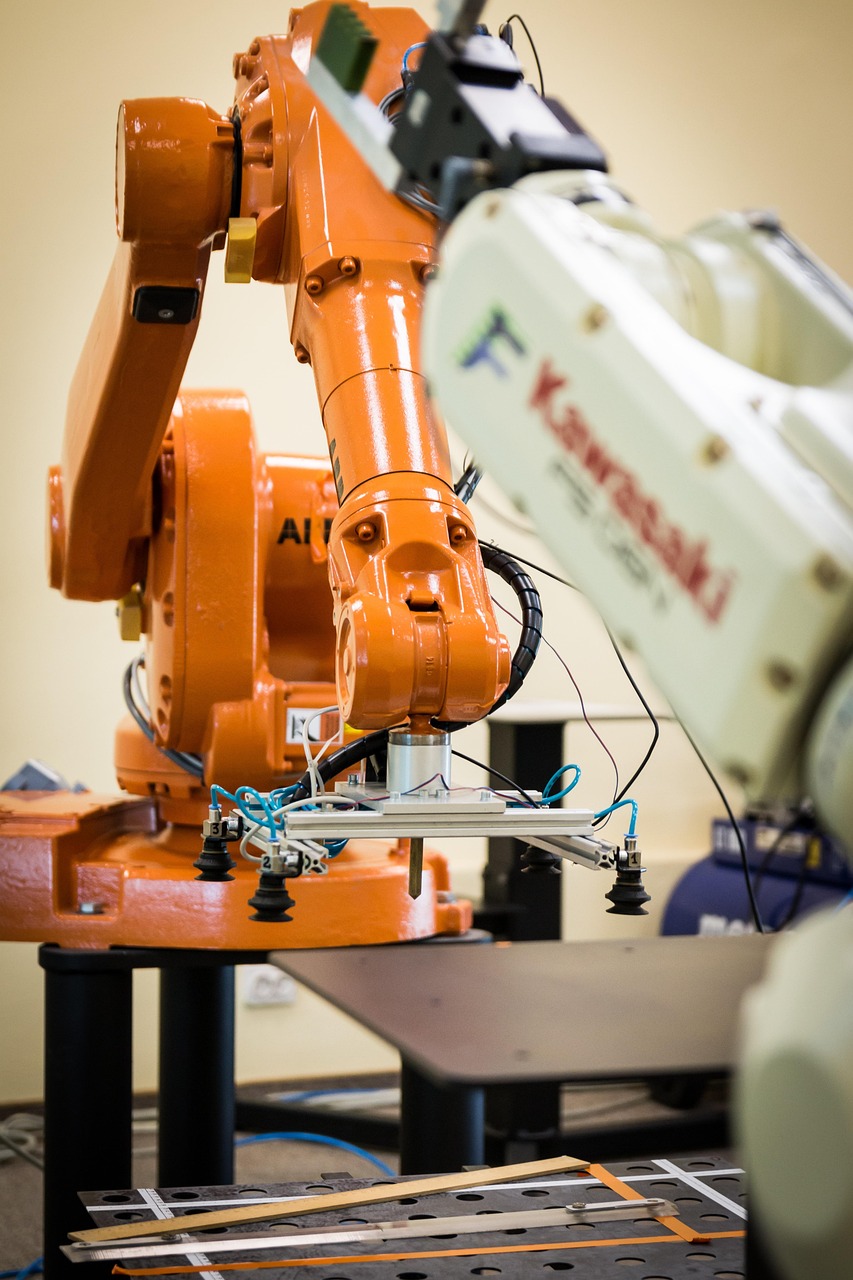
This will give rise to modular manufacturing systems — production cells that can be reconfigured to handle different products, materials, or customer requirements. Robotics will be mobile and collaborative, capable of working alongside humans without needing today’s fenced-off systems.
Modular factories will allow companies to introduce new models without costly downtime and enable rapid response to evolving specs from their customers, even going so far as supporting localized production in remote regions.
If you read Good to Great, you’ll recall Nucor Steel’s model of small regional production plants instead of one single large centralized factory. This will be an extension of that.
What leaders must do now: Rethink capital investment instead of sinking capital, time, and resources into single-purpose equipment. Focus more on automation and robotics that can evolve as your product line changes.
3. Sustainability Becomes a License to Operate
In the past, sustainability was usually just a marketing line item or a compliance box you ticked off once a year. But in 2030, it will be de rigeur and a standard operating procedure. Customers and investors will look for it, government regulators will require it. They’ll want to see transparent, measurable progress toward decarbonization and reducing your carbon footprint.
This means your production cycles will need to be redesigned with sustainability at their core. That means closed-loop material cycles, zero-waste processes, and renewable energy integration will all be standard.
AI will play a critical role here (and no, the irony of a resource hog like AI being used is not lost on me). It will help optimize energy use, minimize scrap, and enable more accurate lifecycle assessments.
What leaders must do now: Build sustainability into your strategy now, not when it’s required. Become one of the leaders of sustainability now and control the industry’s adoption when it’s required. You’ll be the one winning contracts and setting precedent instead of following everyone else. Track and manage your carbon, water, and waste just as closely as you do your financial metrics and see if you can get any tax credits or government grants to increase the ROI of sustainability.
4. Supply Chains Become Regional and Resilient
The global supply chain is crystal-fragile, and thanks to the pandemic, geopolitics, extreme weather, and trade disruptions, we can see the damage that has been wrought. The future is going to be about resilience, not efficiency.
Regionalized supply chains (called “nearshoring”) will become the new normal, and manufacturers will balance their global reach with local agility, build backup vendor networks, and parse out their production capabilities. (Again, like Nucor Steel.)
What leaders must do now: Map out your supply chain risk exposure. Look at where your normal suppliers live and see what kinds of potential disruptions exist — weather, politics, tariffs, and so on. If it helps, put all that information into a GPT and ask it to predict potential disruptions. Then start building backups and redundancies into the supply chains, especially the critical ones. Start exploring partnerships that allow for more localized production (e.g., anything within a 3-day domestic shipping window).
5. Human Ingenuity Becomes the Ultimate Differentiator
I think the most surprising trend for 2030 will be that human ingenuity will matter more than ever. It won’t be replaced by AI, no matter how powerful AI and automation will become. Machines can’t solve complex, multidimensional challenges. They can’t be leaders, and they can’t manage people. You’re still going to have people working, and you’re going to have to deal with all of the baggage that people will bring to the workplace.
The companies that succeed will be the ones whose workforces are capable of leveraging technology. creatively, and using it to solve problems, adapt, and collaborate across disciplines. Operators will need to understand data streams as much as they understand equipment. Engineers will need to think about performance as well as sustainability.
What leaders must do now: Invest in people now, not five years from now. Develop training programs and education reimbursement programs that teach digital literacy, sustainability, and systems thinking. Build a culture that helps employees feel like they can work with technology, not fear it. Build a workforce that can adapt to new technology, and start identifying people with the intelligence and know-how to embrace the coming wave of AI adoption.
By 2030, manufacturing enterprises will succeed or fail based on their ability to integrate these five trends. It won’t be easy: the temptation will either be to chase the latest tool or technology, or to give up when things start getting difficult.
But the real trick is going to be to embrace the forces that are shaping our industry: aligning strategy, investment, and culture.
Manufacturing has always been about building the future. As we approach 2030, we’re going to need a bold, forward-looking vision. Can we adapt fast enough?
Photo credit: Jarmoluk (Pixabay, Creative Commons 0)
