

- April 23, 2025
- Posted by: David Marshall
- Category: Management, Manufacturing
I’ve been in manufacturing leadership for a long time, and I’ve seen some amazing technological advances. Gains in efficiency, gains in productivity, an increase in safety and sustainability — they all came from tightly-tuned (tightly-wound?) supply chains.
For decades, the goal has been to adopt the Japanese method of “lean manufacturing” and reduce redundancy, minimize inventory, and optimize your supplier networks in search of cost efficiency.
And everything worked great, until it didn’t.
The last few years have turned the global supply chain into a, well, clustertruck. A pandemic shutdown, shipping gridlocks, geopolitical instability, wars, and extreme weather have all become the standard that you have to contend with, depending on your suppliers and your customers. Someone, somewhere, is being disrupted, either in sending or receiving their goods.
The rise of resilient, disruption-resistant supply chains is more than a response to crises; it’s a fundamental shift in how manufacturers and suppliers must think, plan, and operate.
Why Supply Chain Resilience Matters Now
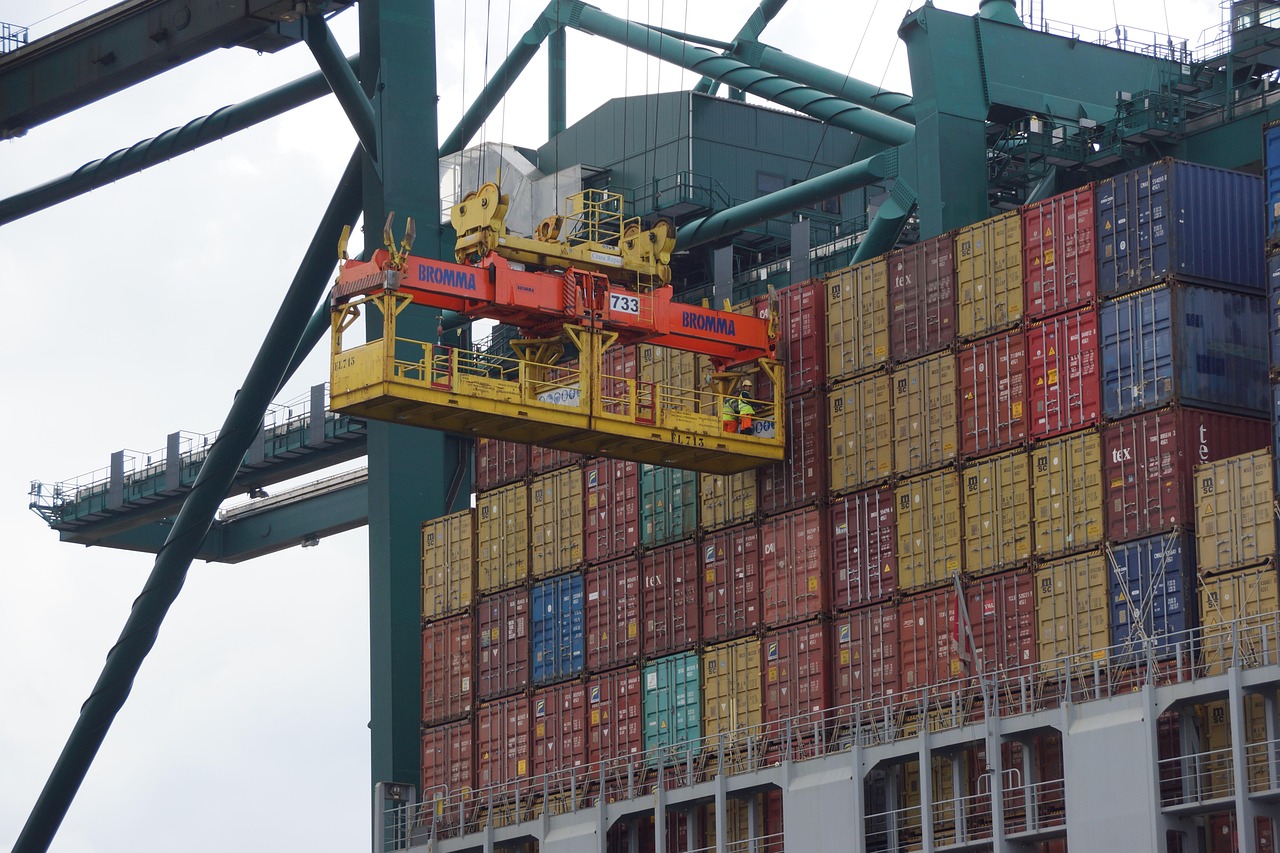 For decades, manufacturing supply chains were built around cost optimization. The goal was simple: find the cheapest materials, manufacture your products in the lowest-cost region, and deliver with just-in-time precision. The system was efficient, and it worked, but it was unstable and brittle. It looked like a Dr. Seuss illustration, with cans and boxes all teetering in stomach-clutching chaos.
The vulnerabilities became clear during the COVID-19 pandemic. Plants were idled, not because the demand disappeared, but because the critical parts — chips, resins, steel, packaging, and other raw materials and parts — were stranded overseas or stuck in ports.
This wasn’t all. Add to the mix:
- Geopolitical tensions that disrupted trade flows.
- Climate change leading to more destructive weather patterns and natural disasters that interrupted shipping logistics.
- Cybersecurity threats to targeted digitalized supply networks.
- Shifting regulations that demand greater transparency and compliance.
- Shortages of skilled high-tech labor
As manufacturers, we’re no longer asking if supply chains will be disrupted, but how and how often. Resilience is no longer an option; it’s table stakes. You can’t just think about it, you have to have it, or you may not survive the next hurricane, wildfire, flood, or ransomware attack.
What Does Supply Chain Resilience Mean?
Resilience doesn’t mean hoarding inventory or building unnecessary redundancies or overproducing finished products “just in case something happens.” True resilience is being able to adapt, recover, and thrive in the face of some of the disruptions we’ve discussed.
A resilient supply chain has four characteristics:
- It’s visible, meaning you have transparency across suppliers, logistics, and inventory. Without it, you’re flying blind during a disruption.
- It’s flexible, which means you can pivot quickly between suppliers, transportation routes, and even your own production sites. It gives you continuity when one of those nodes fails.
- It has redundancy. You have backups for critical materials and processes; you know where the buffers need to go, and where it’s still viable and acceptable to be lean.
- It is collaborative, meaning you have strong relationships with suppliers, customers, and logistics providers you can trust. This makes your supply chain an ecosystem instead of a series of transactions.
And technology enables these new levels of resilience in ways we never could even a decade ago. For one thing, predictive analytics (i.e., AI and machine learning) can forecast disruptions before they occur, rather than just relying on your floor manager’s trick knee for weather forecasts. AI can help you model scenarios and make adjustments in real time.
AI also lets you use digital twinning let you create virtual replicas that let you simulate your supply networks to test the impact of disruptions and identify vulnerabilities before they blow up. You would have had to have real-life simulations with everyone involved, playing “What if” around a conference table and brainstorming the worst-case scenarios.
You can even trace your products thanks to blockchain and traceability tools, which give you tamper-proof visibility into sourcing, compliance, and ethical practices. That way, if one part or even one batch fails, you can trace it all the way back to the operator, machine, and raw materials.
Finally, advanced automation gives you flexibility in production, which reduces your dependency on a single supplier or geography, because you can work with more localized, adaptable manufacturers.
Won’t You Come Home?
Hyper-localization and near-shoring are becoming the watchwords for many manufacturers, after decades of globalization and off-shoring production work. They chased lower costs, not realizing the troubles they were creating for themselves 30, 40, even 50 years into the future. What seemed like a good idea at the time is now something they have to undo or get squeezed out of the markets.
I predict that by 2030, we’ll see more regionalized supply chains that, instead of relying on a single distant supplier halfway around the world, companies will tap multiple sources from different places around the country and the globe.
Regionalization also reduces carbon footprints and increases sustainability, both of which customers and regulators are increasingly demanding.
Five Priorities to Create a Resilient Supply Chain
Resilient supply chains are no accident. They’re deliberate and intentional. Here are five priorities you need to embrace for the next five years.
- Map your supply chain deeply: Most manufacturers only know their Tier 1 direct suppliers. But true resilience requires knowing your Tier 2 and Tier 3 suppliers as well. Not only your backup suppliers, but who are your suppliers’ suppliers? Sort of the way that an NFL quarterback will not only study the opposing coaches’ game film, he studies that guy’s boss to see where he learned his strategies. You have to know where your suppliers could be disrupted.
- Invest in a digital infrastructure: If you don’t have robust data and analytics, you have no idea what’s going on. Adopt digital tools like AI and machine learning to give you real-time visibility and predictive insights across your networks. No more guessing or hunches. That might have worked in the 1970s and 1980s when you had room for error, and we were all spending money like it was our jobs. Now, everything is lean, and you have to get everything right the first time, or it’s going to cost you big.
- Balance efficiency with redundancy: Lean principles are still critical, but you still need strategic buffers. In addition to your own errors and misjudgments, your suppliers and customers are going to make errors as well. This is on top of your supply chain disruptions like weather and geopolitical events. Have redundancies built into place, but don’t double your costs with “just in case” thinking.
- Strengthen supplier relationships: If you’re just a transactional customer with your suppliers, especially your biggest suppliers, you’re at the bottom of everyone’s list. Remember, people buy from people they like and trust, but that also means those people get helped first. If you had to decide between fulfilling an order between a once-in-a-while customer or your best customer who you’ve been with for years, who are you going to pick? Now, put yourself in your supplier’s shoes and ask that question again: which kind of customer are you? One who shops around and beats suppliers up on price, or one who sticks with your partners and helps them as much as you can? Who are they going to choose in a disruption?
- Make resilience part of the culture: Resilience is not just about supply chains; it’s also an organizational mindset. In individuals, we call it “grit” and “entrepreneurship.” In businesses, we call it thinking adaptively and creating redundancies. From your procurement people to your production planning, empower your employees to think adaptively and act decisively when disruptions happen.
Creating resilient supply chains is a profound shift in manufacturing strategy. Efficiency is always critical, but in a world of constant and ongoing disruptions, resilience is what separates the companies that thrive from the ones that dive.
It’s almost like the fable of the ants and the grasshopper: If you invest in resilience today, you’ll reap the rewards tomorrow: fewer shutdowns, stronger customer relationships, and the ability to turn disruption into opportunity.
The ones who don’t, or who wait until the disruption happens before they deal with it, will find themselves at the mercy of forces beyond their control.
So ask yourself: Is your supply chain built for efficiency or for resilience? In five years, only one of those answers will guarantee survival.
Photo credit: HesselVisser (Pixabay, Creative Commons 0)
